Understanding where to market your brand is definitely a challenge. You’re on LinkedIn because everyone says you should be and then you’re posting to Instagram because your competitor does.
Don’t forget you’ve also got Google Ads running because a sales rep convinced you it was essential and finally there’s your old Facebook page to manage, because you set it up three years ago and never had the heart to stop.
This leaves you in the very real predicament that you’re spreading your budget, time, and energy so thin that none of it really delivers success to grow the business.
Running my own solo agency I understand the challenge. I manage my own LinkedIn presence and Google Business Profile alongside client work, and I know exactly how easy it is to end up spreading yourself across platforms that aren’t actually working – posting into the void while the one channel that would actually reach your customers sits neglected.
Why the platform you choose matters more than how often you post
Marketing platforms aren’t all the same. They serve different purposes, attract different audiences, and require different approaches. Understanding which community space matches your business can mean the difference between wasting money and getting results.
Google: best for businesses people are actively searching for
Think of Google as the Yellow Pages on steroids. When someone searches “emergency plumber Farnborough” or “solicitor near me,” they have intent. They need something now, and they’re actively looking for it.
This is the space for businesses that solve urgent problems or serve people who know roughly what they need. If your customers are searching for solutions, this is where you need to be.
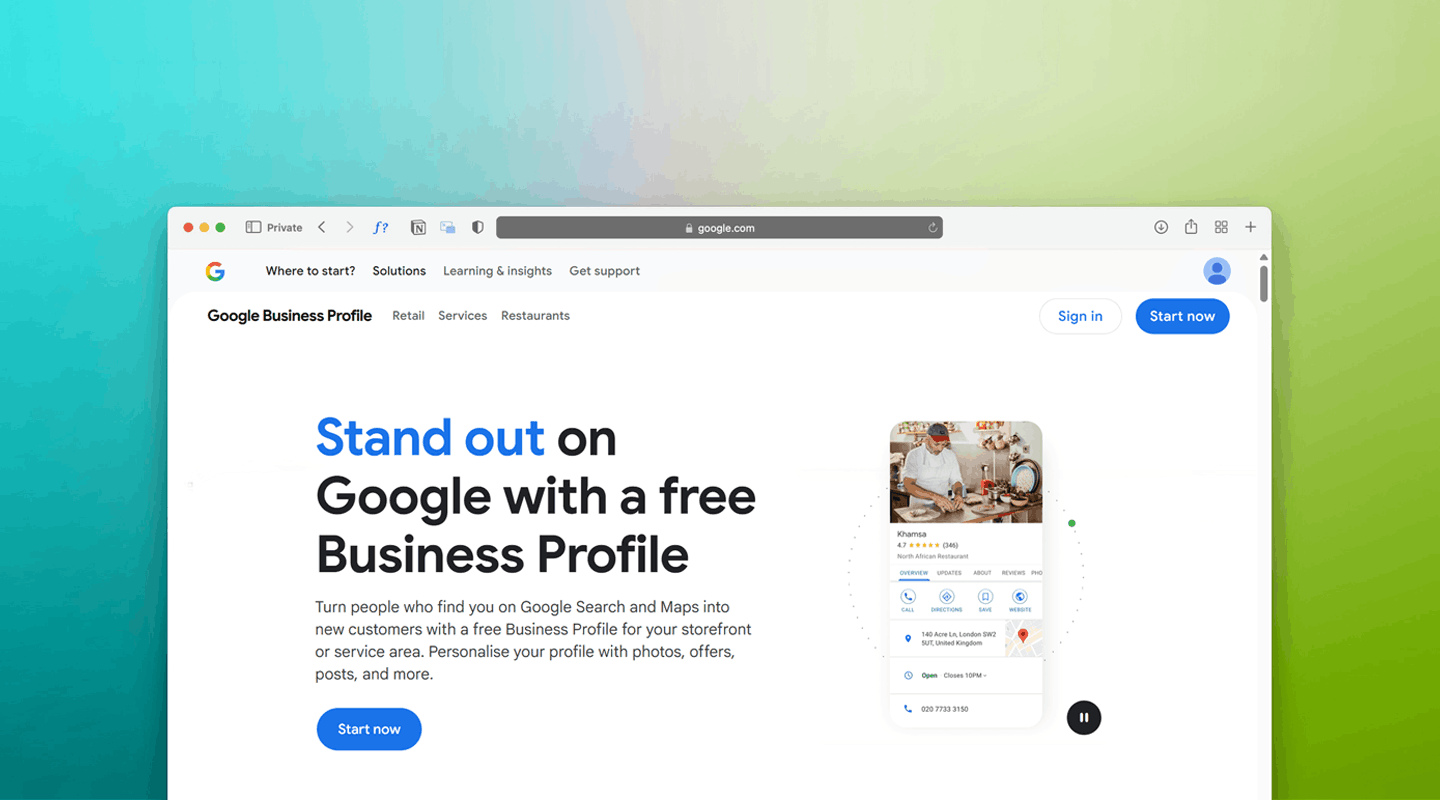
And if you serve local customers specifically, your Google Business Profile is one the single most important tools you have for appearing in those searches.
Even with AI tools, research by Statcounter found that Google dominates search with over 90% market share in the UK. When people need something, they Google it and if you’re not there, you don’t exist in that moment of need.
The strength of Google is immediacy. Someone searches, sees your ad or website, and can call you within minutes, however the weakness is competition. Everyone in your industry is fighting for the same searches, which drives up costs for paid ads and requires constant attention to stay visible in organic search.
This online space works for tradespeople, professional services like solicitors or accountants, emergency services, and any business where customers are actively searching for a solution right now.
It doesn’t work as well if you’re selling something people don’t know they need yet, or if your service requires significant education before someone is ready to buy.
LinkedIn: best for B2B services and high-value sales
LinkedIn is arguably a permanent networking event. Everyone there is in business mode, (including the workplace banter and memes) which makes it the natural home for B2B services, high-value products, and professional relationships.
Unlike other platforms where people are scrolling for entertainment, LinkedIn users are there to learn, connect, and find solutions to business problems. That mindset shift is crucial.
80% of B2B leads generated through social media come from LinkedIn. If you’re selling to other businesses, this is where your customers are paying attention.
To give you a real example from my own experience, over the past 90 days my LinkedIn profile has generated 3,972 impressions and 120 engagements, up 757% on the previous period (screenshots below), purely through consistent organic content with no paid spend. It’s not viral numbers by any stretch, but it shows what focused, regular activity on the right platform compounds into over time, and this is a personal profile, not a brand page with a big following behind it.
I carve out a few hours each week to create a series of posts (at least one post per week) and schedule them in LinkedIn, aiming to follow a content plan for the year which presents insights, advice and experience to my target audience. For me it’s not about direct ‘selling’ but using the platform as a space to naturally start conversations and build awareness of my skillset and services.

The strength of LinkedIn is quality over quantity. You’re reaching decision makers, budget holders, or people actively thinking about their business challenges, and the conversations that start here can often lead to five or six figure contracts.
The weakness is patience. LinkedIn is a long game, where you need to build relationships and demonstrate expertise over months, not making immediate sales. If you need quick wins, this isn’t your space.
It works well for consultants, B2B service providers, professional services, high-ticket products that require meetings and proposals, and anyone whose sales process involves multiple touchpoints and relationship building.
It doesn’t work for impulse purchases, low-cost consumer products, or anything that relies on emotional or visual appeal over logical business decisions.
Facebook and Instagram: best for visual products and lifestyle brands
Meta is like a digital billboard in a very specific local area. You can target people based on their interests, behaviours, and demographics with scary precision, then put visually compelling content in front of them when they’re in browsing mode.
This is the community space for lifestyle products, visual services, and anything that benefits from being seen rather than searched for. Someone scrolling Instagram doesn’t know they want your product until they see it and think “oh, I need that.”
Facebook and Instagram together reach around 70 million users in the UK. That reach is massive, but only valuable if those users match your customer profile.
The strength of Meta is discovery and emotion. You can introduce people to products they didn’t know existed and create desire through great imagery and storytelling. On the flipside, the weakness however is distraction. People are there to scroll, not to buy, so converting attention into action requires skill.
This space works for visually appealing products, gifts and lifestyle items, local businesses targeting specific areas, retail and ecommerce, and brands that rely on aspiration or emotion to drive purchases.
It doesn’t work as well for complex B2B services, emergency solutions where people need help now, or products that require detailed explanation rather than visual appeal.
Which platform is right for your business?
When it comes to creating hours worth of content or paying thousands in ad spend each month, the best approach is not to guess. Here’s how I approach things with clients:
- If your product or service costs more than £5,000 and requires a meeting to close the sale, you need LinkedIn. High-value B2B sales happen through relationships and trust, not impulse clicks.
- If your service is an emergency or solves an urgent problem, you need Google. When someone’s boiler breaks or they need legal help immediately, they’re searching, not scrolling social media.
- If your product is visual, giftable, or relies on lifestyle appeal, you need Meta. Products that people discover and desire rather than actively search for thrive on Instagram and Facebook.
- If you serve local customers in a specific area, Google and Meta both work, but for different reasons. Google captures active searchers in your area. Meta lets you target everyone in your postcode who matches your customer profile.
- If you’re selling to other businesses but your product is lower cost or more transactional, LinkedIn might still work, but Google could be faster. It depends whether people search for your solution or need to be educated about it first.
The point isn’t that one platform is universally better. The point is that one platform is better for your specific business, and that’s where you need to focus.

Don’t Fall Into The Autoposting To All Trap
One recommendation I often feed back to prospective clients following an audit of their marketing is to stop creating one piece of content and blasting it to every platform simultaneously using automation tools.
A LinkedIn post about industry insights doesn’t work on Instagram. An Instagram story about your behind-the-scenes culture doesn’t work on Google and a Google ad focused on immediate action doesn’t work well on Facebook.
Each platform has different user expectations, content formats, and engagement patterns, so when you auto post the same content everywhere, it speaks the wrong language to these audiences.
More importantly, you’re wasting time maintaining a presence on platforms where your customers aren’t paying attention. Yes it feels productive because you’re doing marketing, but busy doesn’t equal effective.
Start With Your Customer, Not The Platform
At the heart of all of your marketing should be your team and the customer: choosing the right platform is pointless if you haven’t figured out who your ideal customer actually is.
Before you spend another pound on marketing, you need to know who you’re trying to reach, what problem you’re solving for them, and where they really spend their time when they’re looking for solutions.
It’s not marketing theory, but simply basic business sense. If you’re trying to sell high-end B2B consulting to busy executives, Instagram is a waste of time no matter how good your content is. If you’re selling handmade jewellery to women aged 30-50, LinkedIn probably isn’t your answer.
Get clear on your customer first and then pick the space where they’re showing up.
Your Next Step is A Simple Marketing Audit
Pull up your marketing spend from the last three months and look at every platform you’re paying for, whether that’s ads, tools, or time. Ask yourself these questions:
- Where are we getting enquiries from?
- Which platform requires the most time and delivers the least results?
- Are we on a platform because our customers are there, or because we think we should be?
- If we stopped posting to one platform tomorrow, would anyone notice?
Be brutally honest, because every pound and every hour you’re spending on the wrong marketing space is a pound and an hour you’re not spending on the right one.
Most businesses I work with are on too many platforms, doing too little on each of them to make any real impact, yet when they consolidate, focus, and commit to one or two key spaces their results improve dramatically.
If you’re unsure which community space is right for your business, or you’re tired of wasting money on platforms that aren’t delivering, let’s have a proper conversation about where you should be focusing your energy. I know marketing is a big investment for any small business, so I offer a taster Straight-Talk Strategy Session where we can meet and discuss your marketing challenges and I can give you direction of where to focus.
For more practical marketing advice to support growth in your business, explore our other marketing insights.
Get in touch
Looking for Marketing Support That Drives Business growth?

Chris Tallant is the founder of Velaris Marketing, a freelance marketing and design partner based in Surrey. With over 15 years of experience across strategy, digital marketing, content and print design, Chris helps SMEs across Surrey, Hampshire and beyond get their marketing working properly, without the overhead of a full-time hire.